

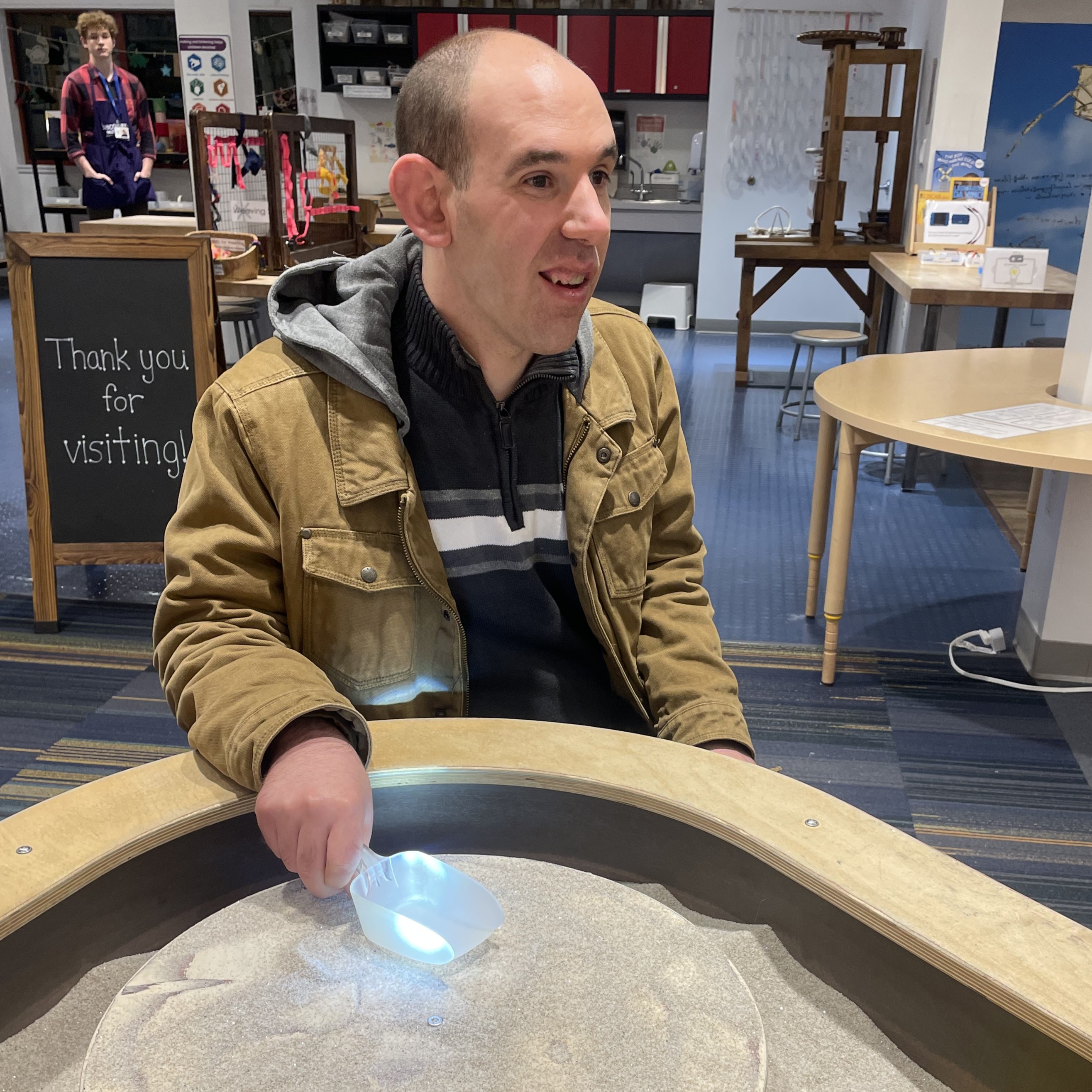
Museums, particularly children’s museums, offer interactive and sensory learning experiences that can benefit individuals with intellectual and developmental disabilities of all ages. The Discovery Museum in Acton, MA, is a science-based children’s museum with a focus on “exhibits, programs, and experiences that encourage caregiver–child relationships to play and learn.” Their popular exhibits include the Air Gallery, Light & Color Gallery, and Water Gallery, where visitors have multiple ways to see, feel, and experiment with the different elements.
While all these areas have tactile ways to learn, it can still be an overwhelming experience on a busy day at the museum. The Discovery Museum has been a leader in building accessible and sensory-friendly programming for families. Since 2010, they have offered “Especially for Me” (EFM) events after hours with limited attendance, additional sensory break spaces, and staff trained to support individuals with autism.
Museum staff reported that some families frequented the EFM events, knowing it was a supportive and judgement-free environment, while others became familiar with the museum and felt comfortable to attend during regular hours with the free membership offered through the program.
As the EFM program evolved, the Discovery Museum realized another group was missing.
Allison Daigle, Executive Director of the Autism Alliance, had fond memories of bringing her son with autism to the museum when he was 6 years old. But as an adult, Allison struggled to find similar programming where her son could have the same interactive learning and sensory experiences.
In an article about the EFM events and the benefits of access to children’s museums for young adults with IDD, authors Susan Heilman, Allison Daigle, and Pam McKillop write:
“Children’s museums have many activities that are intellectually appropriate for adults with autism. However, their caregivers may not think that it is suitable to visit a children’s museum, which is often designed for children under 12 years old. Caregivers of these adults worry about the bodily size difference and the potential physical interactions, however innocuous they may be intended, with smaller individuals. This logistical factor should not be prohibitive, but part of the considerations when welcoming adults.”
The Discovery Museum offered an EFM event exclusively for individuals with autism 18 years old and up, but they quickly saw that the need was even greater. By partnering with organizations like Massachusetts Down Syndrome Congress, Minuteman Arc, and The Guild, they got feedback on how to expand the program to include a larger network of adults with physical and intellectual disabilities and their families.
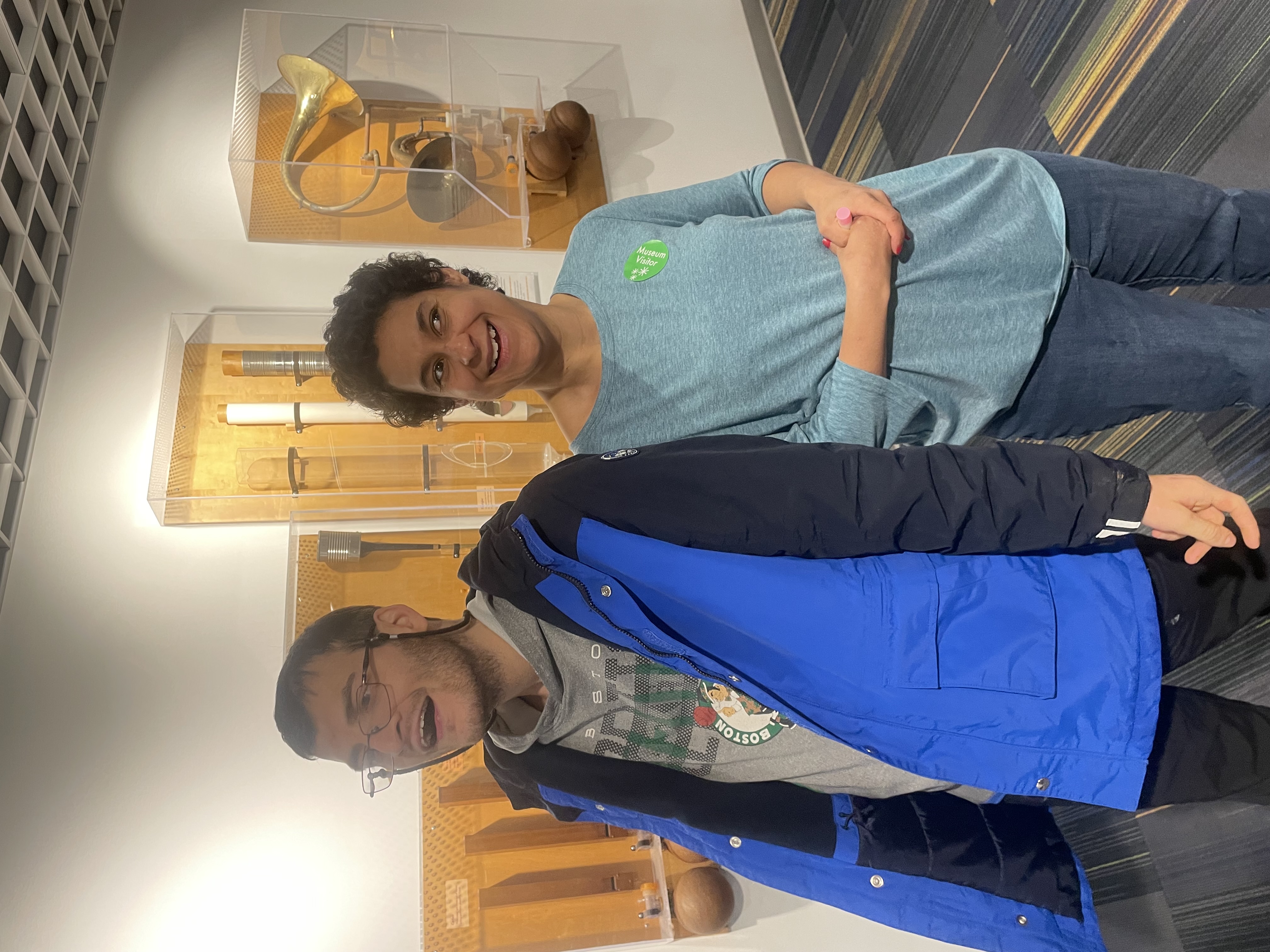
The authors of the article said that in this process, “Staff from these community groups shared advice on the differences in experiences involving adults versus children, most of which was related to size and perception of adult capabilities, and they were important thought partners in developing activities and adaptations for this audience.”
Adult residents from The Guild have been attending the EFM events for adults regularly since they were implemented a few years ago. The Billerica, Burlington, Maynard, Sudbury, Waltham 1, and Woburn 1 houses rotate attendance monthly. The events provide a sense of routine and a familiar way to engage with the community.
“The Discovery Museum team provide modeling and support to our staff in discovering the joy of inquiry and play with our residents,” says Maureen Costello-Shea, Chief Program Officer. “They learn we are all never too old for play, exploration, and fun!”