A comprehensive approach
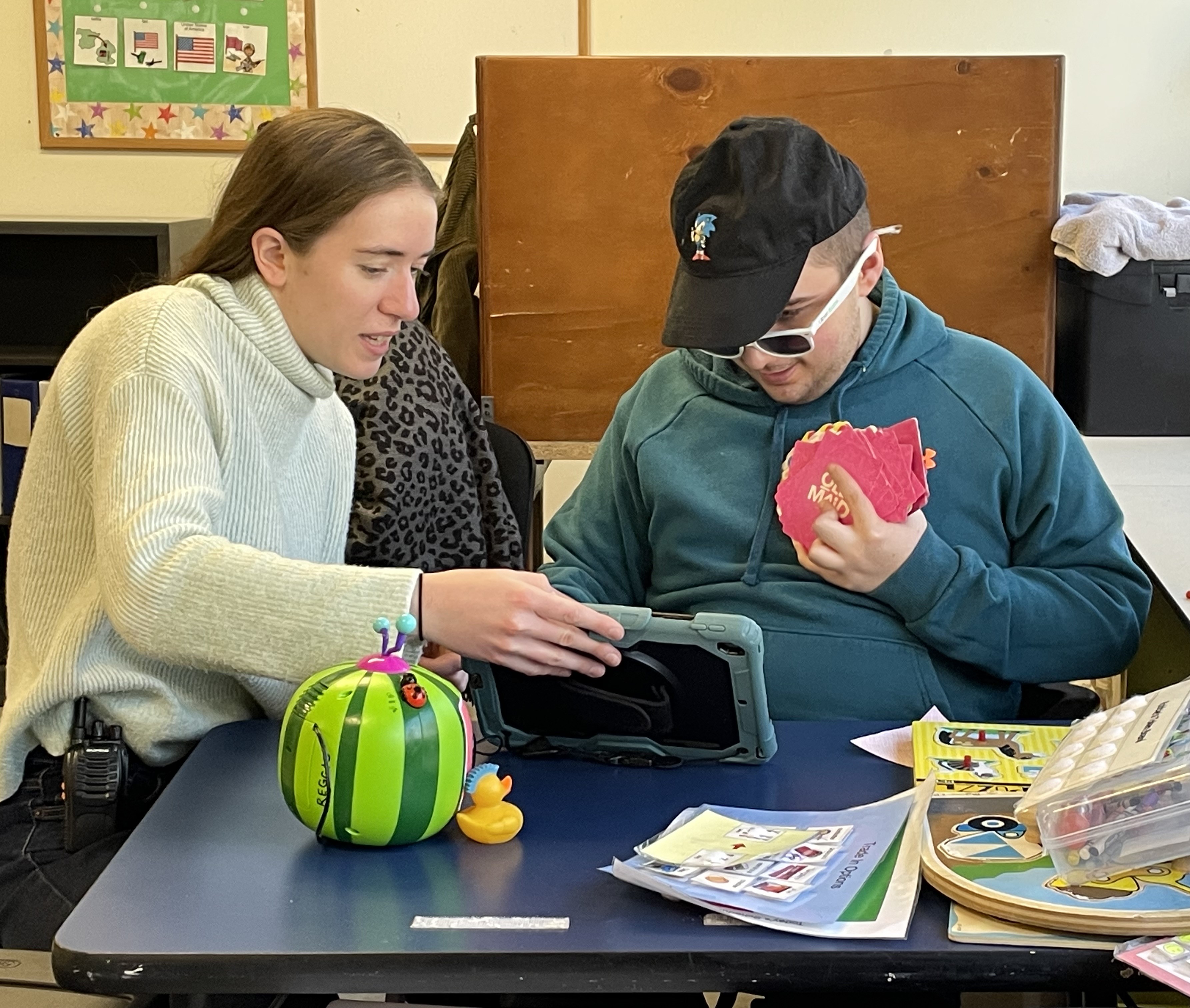
The Guild recognizes the benefit of collaboration across clinical disciplines. All clinical departments work together using an interdisciplinary model to provide targeted interventions.
Clinical Services at the Guild is made up of:
Occupational Therapists (OTs)
Speech-Language Pathologists (SLPs)
Together, they work closely with students, families, teachers, and other clinicians to enhance students’ abilities to participate in school and home activities and meet the goals of their Individualized Education Plans. We value working as a team to improve students' communication and life skills to support meaningful experiences at school and in the community.
Our work is guided by evidence-based practices with a strong emphasis on functional skills and quality of life. By working collaboratively and bringing in multiple perspectives, we are able to work more effectively towards students’ self-determination and success.
The Value of Interdisciplinary Clinical Collaboration
Our clinicians recognize that the individuals we serve have complex, and often multiple, diagnoses that don't fit neatly into separate therapeutic categories.
Research has demonstrated that a holistic approach results in the best outcomes, which is why our clinicians work together to create shared, meaningful goals and interventions that examine needs from multiple expert perspectives. For example, when a student is working on communication skills, our team considers how behavioral supports, sensory needs, and emotional regulation all play a role in their success.
This integrated approach means families and staff receive consistent messaging and coordinated support across all areas of a student's life, rather than navigating conflicting advice from separate providers. Through close, interprofessional collaboration across settings, we ensure that every aspect of a student's experience supports their development and wellbeing.
Community-based clinical support
Our clinicians have the flexibility to provide services where our students actually live and spend their time—in the community, at Guild residences, and in collaboration with programs like Without Walls. This approach helps students see how their skills apply to real-life situations, such as improving their ability to communicate their wants and needs in the moments that matter most.
Unlike most school-based programs, our clinicians also work directly within Guild residences, providing comprehensive support that bridges what students learn in the classroom with their daily life at home. When students can apply their learned skills across all settings, they gain greater independence, stronger relationships, and more opportunities for self-determination and self-advocacy.
This model also gives residential staff direct access to clinicians for training and coaching—an opportunity rarely available in typical programs—ensuring they have the tools and strategies to support continued growth. This means progress extends beyond the classroom into every part of students' lives.