
Meeting students where they are at
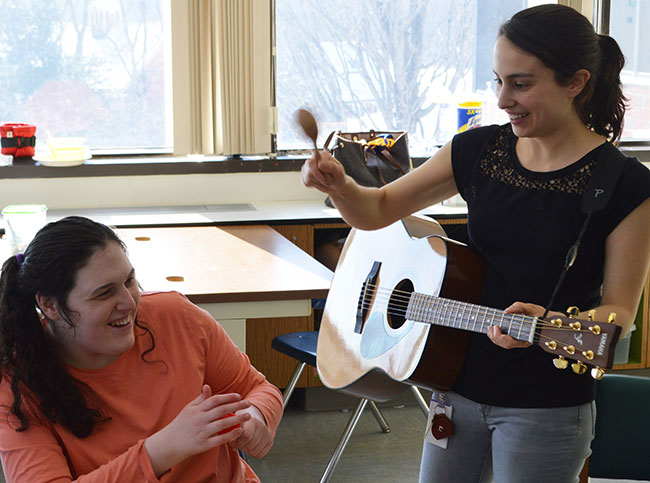
The Guild's team of licensed mental health counselors and social workers are committed to providing strengths-based, student-centered, trauma informed care. Using a range of therapeutic modalities allows the team to account for the diverse developmental, cognitive, physical and emotional needs (strengths and deficits) of every student. These modalities include interventions from expressive art therapies, play therapy, group therapy, family systems work, and trauma-informed frameworks.
Services occur in the classroom, a dedicated counseling space, community locations, and residential homes. Counselors at The Guild provide individual and group counseling sessions as well as milieu-based support and consultation to the educational and residential teams.
Counselors work within interdisciplinary teams to develop treatment plans and design interventions to support student growth in a range of areas including, but not limited to, emotional regulation, development of sense of self, as well as processing of lived experiences.
-
Quality of life
The Guild’s comprehensive treatment plans inform individual and group counseling services. When appropriate, counseling goals may be identified by a student’s educational team and included in a student’s Individual Education Plan (IEP). The objectives for these goals relate to eight established domains of quality of life: emotional well-being, interpersonal relations, material well-being, professional development, physical well-being, self-determination, social inclusion and rights.
-
Trauma-Informed Care (TIC)
Trauma-Informed Care (TIC) is an organizational structure and treatment framework that involves understanding, recognizing and responding to the effects of all types of trauma. TIC emphasizes physical, psychological and emotional safety for both individuals served and providers of care.
The Attachment, Regulation and Competency (ARC) model is a framework for intervention that supports TIC. Created to be used across child- and family-serving settings, ARC identifies three core domains for intervention: Attachment, Regulation and Competency. In this model, Attachment focuses on strengthening the caregiving system by enhancing supports, skills and resources for caregivers. Regulation focuses on increasing awareness and ability to understand, tolerate and manage internal/external experiences. Competency focuses on key factors associated with resilience, including increasing opportunities for choice and empowerment, identifying a range of aspects of self-identity, and building a narrative around key life experiences.