

Individuals with serious intellectual and developmental disabilities often require support from adult service programs when they turn 22. This process can be challenging and filled with anxiety for their loved ones. Every parent wants the best for their child as they become adults, but they may not know where to start.
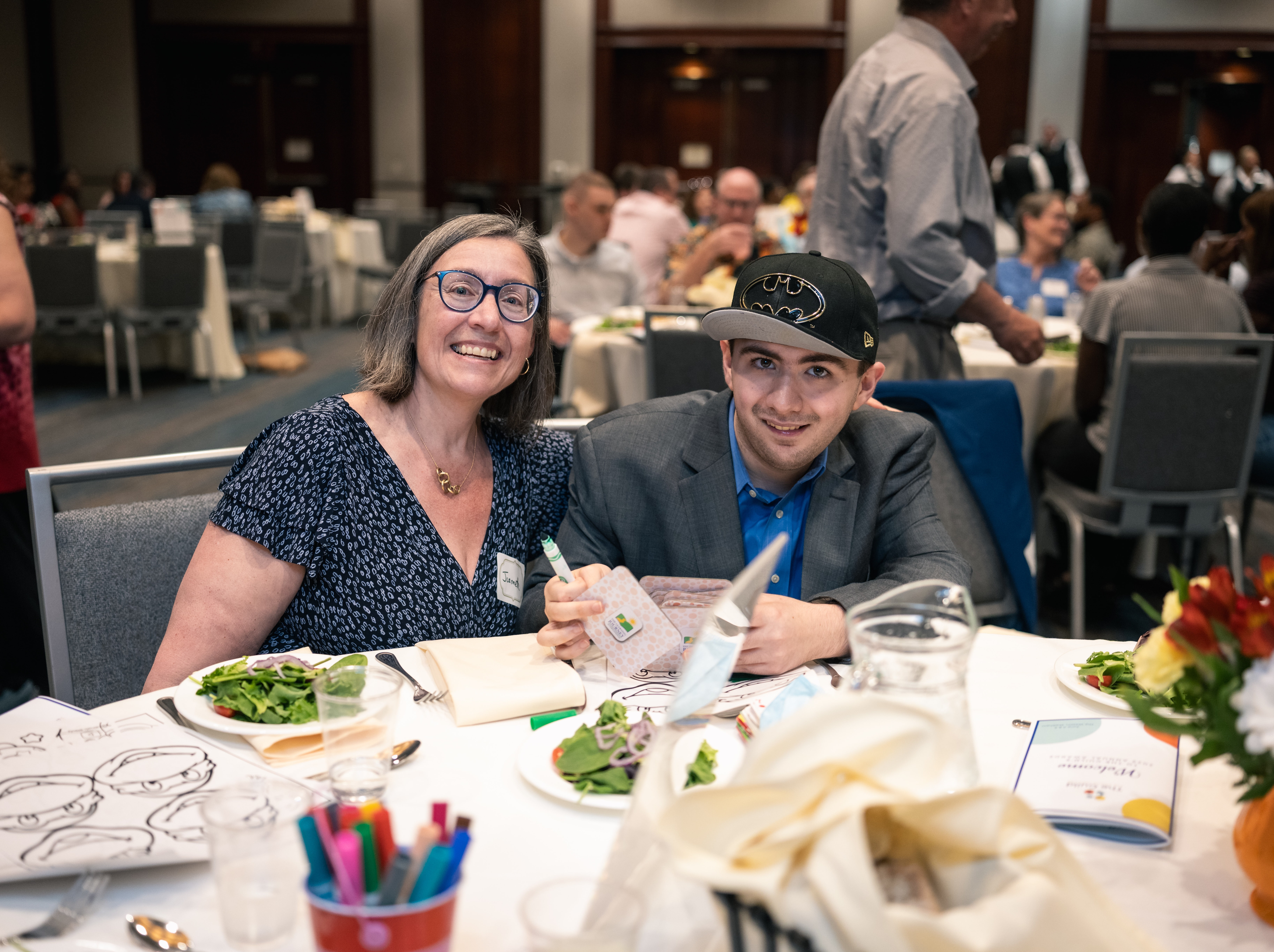
Jeannette P. shares the story of her son Robbie’s transition to The Guild School at the age of 20 after living at home and attending a specialized school for students with profound autism. He finished his academics and then transitioned into adult housing with The Guild.
The following are excerpts from our interview.
Trying to figure out what life was going to be when Robbie was 22 was almost unimaginable for someone who has a child with profound autism and is nonverbal. We always imagined Robbie living with us into his thirties, but then the pandemic happened. Life became smaller, and we lost a lot of our supports.
At that time, Robbie saw other family members going off to college and moving into their own apartments. From what we could tell, Robbie wanted peer connections and to live on his own like his older siblings. After working with the school district, we were able to place Robbie at The Guild School and we’re very grateful for that. We saw after the initial transition that he was very happy living with other young men his age.
Through his actions, Robbie showed us what he really needed, and we moved mountains to make sure that he got the services and support that he needed. I attend some support groups and it’s amazing how many parents think they’re a failure because they had to go into a residential program. And I’m there to tell them, “Your child just needed more than what you could give them. You gave them 100% but they needed 110%.”
I was in talks with our transition coordinator probably three years before he turned 22. It was so stressful. Matching personalities, skill levels, and intellectual abilities is a very big challenge.
They would find something that was available and give us a referral kit. Paper is great, a report is great, but going in person is the only way to make sure that it’s a good fit. Knowing your kid and being realistic about it is the best avenue.
Over the course of six months, there were four different programs the transition coordinator thought were a match for Robbie. As his mom, I didn’t always agree. It was just by chance that there was an opening where he is now, it wasn’t guaranteed. When The Guild offered us a placement in an adult home, it only felt natural to go that route.
The Guild adult program reached out multiple times about the possibility of having Robbie placed into one of two homes. After the initial assessment, he ended up going to the home that was the best fit for him because the majority of his housemates are also non- or low-verbal and have very similar likes. It made me, my husband, and his siblings feel really good knowing he was going into a home where we knew he would be well cared for and he would continue to grow his personal skills.
He’s becoming more independent and he’s self-advocating more, which is huge. The feedback from The Guild is that he’s a joy, he’s always trying to make people laugh, and he’s always being silly. That’s something we hadn’t seen since before the pandemic. We knew he needed more than we could give him to be his best.
We’re very happy that he considers his new home as his permanent home. When he wants to go back to his house, you can tell that he wants to be with his second family. It shows how much he craved being a part of something bigger.
He feels like he has a place where he belongs. I think we all want that. I feel confident that when my husband and I are no longer here, Robbie will be well cared for, and his life skills will continue to grow. We know that he will have his community.