

What is AAC?
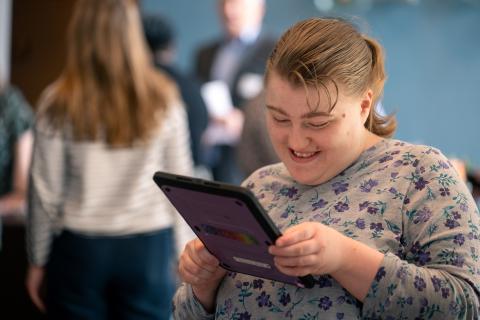
Augmentative and Alternative Communication (AAC) is typically used by individuals with complex communication needs for whom speaking is not (always) an effective form of communication. It can be used to augment or add to an individual’s verbal speech, or it can be used as an alternative to speaking.
AAC encompasses a variety of supportive communication tools individuals use to express their wants, needs, ideas, thoughts, feelings, and more.
Lite-tech forms include picture symbols, sign language, and gestures.
Mid-tech forms include push-to-talk buttons.
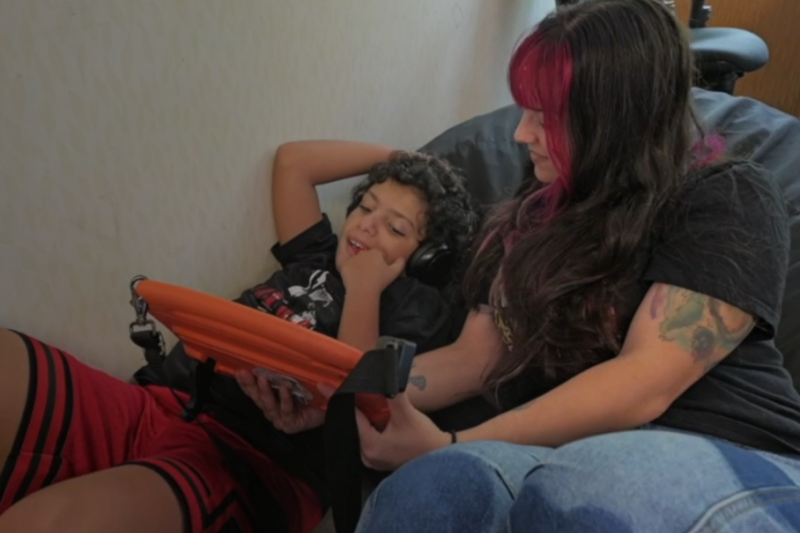
High-tech forms include speech-generating devices.
The Guild takes an individualized approach to ensure all students have robust language systems that they can use across all settings and with all communication partners. Our highly specialized Speech-Language Pathologists are well-versed in the latest innovations of AAC and promote language skills that enable students to thrive in every setting, from classroom to community.
"We Need to Talk": A Documentary
About the documentary
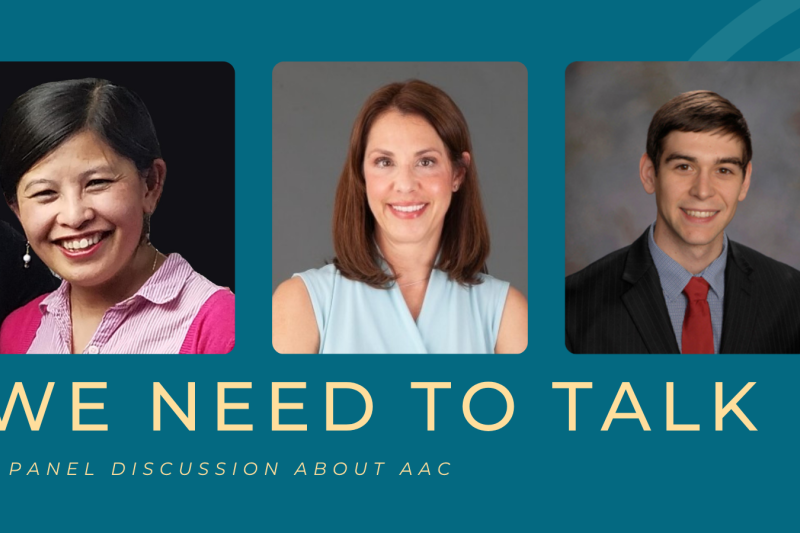
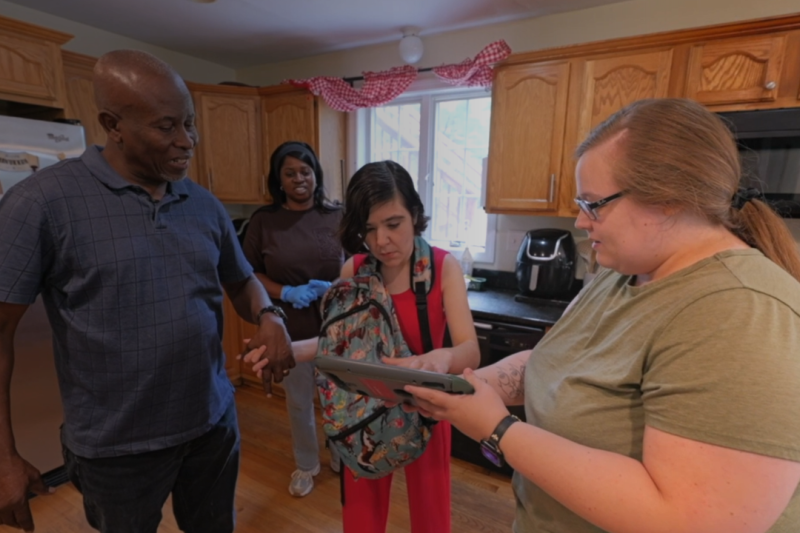
"We Need to Talk," a mini-documentary following five individuals who use communication devices in addition to other forms of communication as they navigate school, work, hobbies, and their communities.
The 14-minute documentary captures the many ways we express ourselves through the stories of five individuals who uses AAC alongside varying levels of spoken language. The film captures the richness of everyday life and the universal desire to connect. Through these stories, we see that language exists on a spectrum that is unique to each person yet rooted in the same fundamental truth: communication is a basic human right.
Everyone has something to communicate. We all need access to the communication supports and we all need to be willing to listen.
Communication Bill of Rights
People have a fundamental right to communicate in all parts of their lives. These communication rights promote full participation across the lifespan.
They include the rights to:
- Dignity and respect in all interactions.
- Meaningful communication that is culturally and linguistically appropriate.
- Be addressed directly and not be spoken for or about as if not there.
- Receive a response to all communication, even when the desired outcome is not possible.
- Participate across settings as full communication partners.
- Interact socially and to build and keep relationships.
- Be given—and to understand—information about objects, actions, events, and people.
- Ask for or refuse objects, actions, events, and people.
- Express preferences and feelings, make comments, and share opinions.
- Make choices from meaningful options.
- Access services and supports for communication across the lifespan.
- Individualized, working AAC systems and other assistive technology at all times.
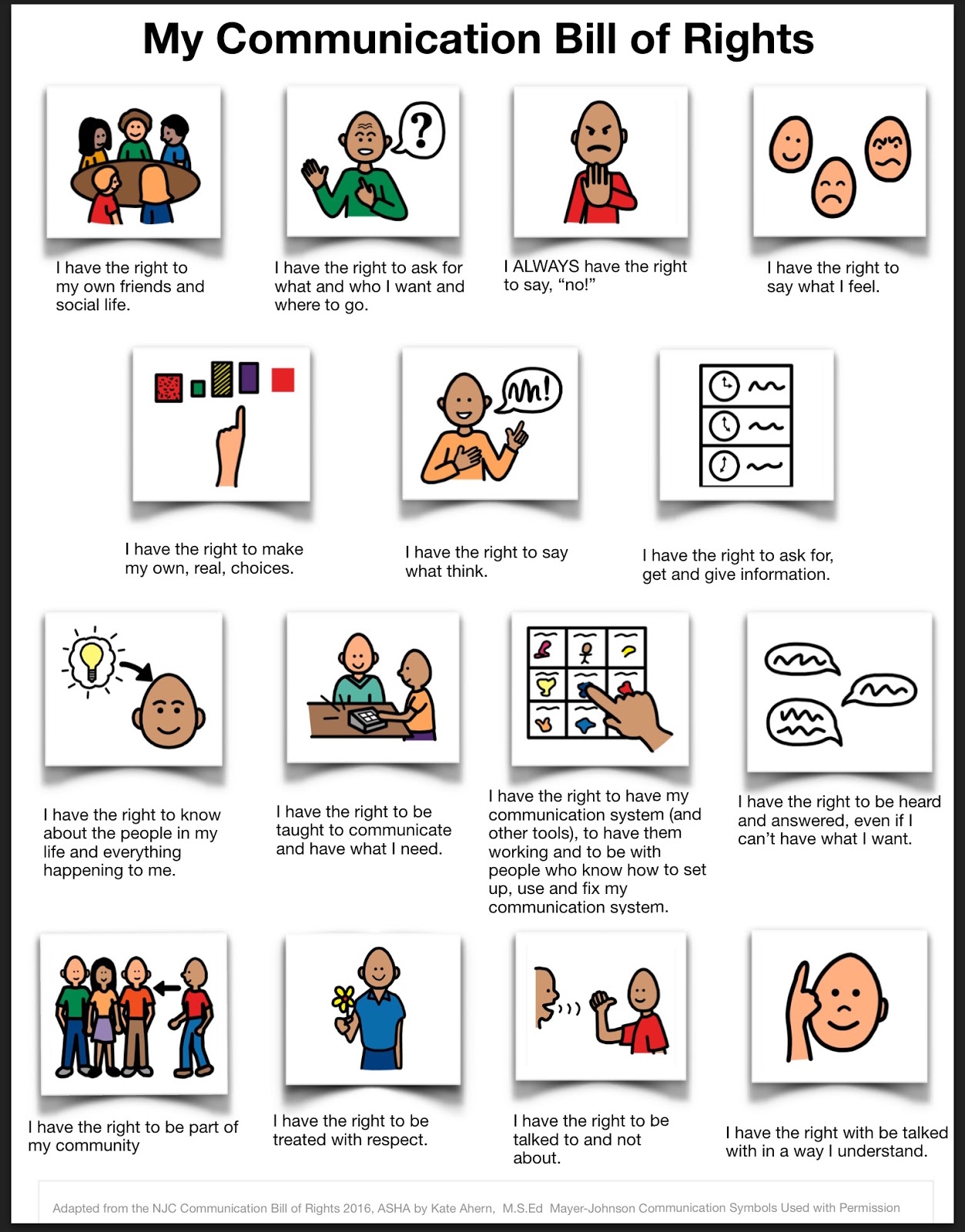
This is the third iteration of the NJC Communication Bill of Rights, developed by The National Joint Committee for the Communication Needs of Persons With Severe Disabilities (NJC). Their original goal was to ensure the basic rights of persons with severe disabilities to affect, through communication, the conditions of their existence.
“A speech generating device, in our research and what we know, gives the person a voice. As everyone knows, a voice is really important. A voice gives you a sense of who the person is, it’s an individual identifier and marker, and it permits the individual to tell you about themselves. Having a voice becomes very important for anybody."
–Mary Ann Romski, American Association on Intellectual and Developmental Disabilities Representative
For more information:
Research
Romski, MaryAnn PhD, CCC-SLP; Sevcik, Rose A. PhD. Augmentative Communication and Early Intervention: Myths and Realities. Infants & Young Children 18(3):p 174-185, July 2005.
Melissa A. Cheslock, Andrea Barton-Hulsey, MaryAnn Romski, Rose A. Sevcik, Steven J. Taylor; Using a Speech-Generating Device to Enhance Communicative Abilities for an Adult With Moderate Intellectual Disability. Intellect Dev Disabil 1 October 2008; 46 (5): 376–386.
Shevin, M., & Klein, N. K. (2004). The Importance of Choice-Making Skills for Students with Severe Disabilities. Research and Practice for Persons with Severe Disabilities, 29(3), 161-168.
Blog reads